
Security + GDPR Audit for SaaS Startups: a practical 45-day checklist
A pragmatic 45-day framework to strengthen security and GDPR readiness in a SaaS startup without slowing product delivery.
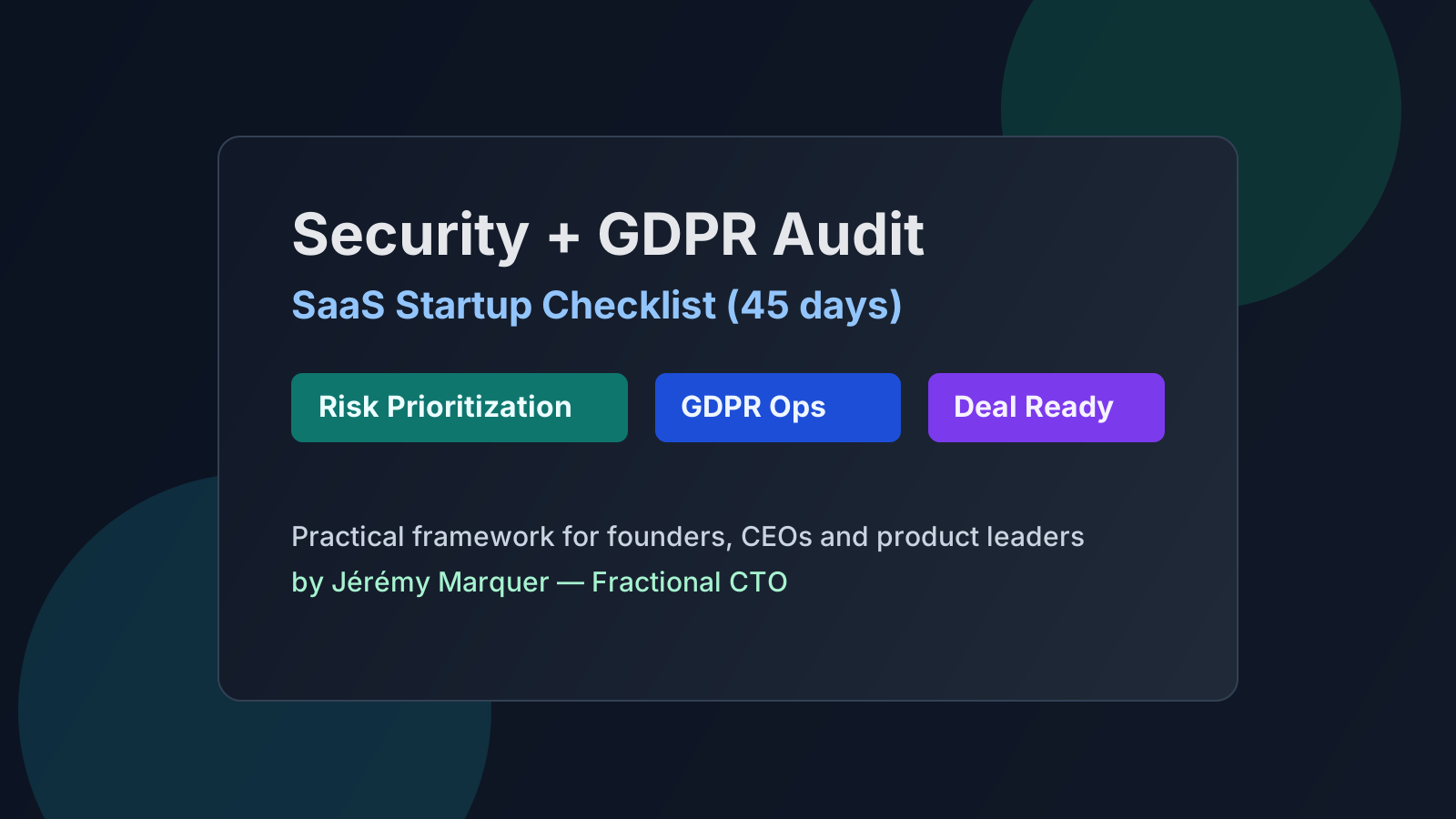
Security + GDPR Audit for SaaS Startups: a practical 45-day checklist
There is a familiar moment in many SaaS companies.
You start closing bigger B2B accounts, and suddenly the conversation shifts from features to trust:
- “How do you control admin access?”
- “What is your data retention policy?”
- “What happens if there is a security incident?”
- “Do you have DPAs in place with your processors?”
Commercially, this is great news. You are moving up-market. Operationally, this is where many teams stall: security and GDPR were postponed while shipping fast.
The issue is rarely “you are not perfect.” The issue is “you cannot prove control.”
This guide gives you a realistic 45-day execution plan to move from ad-hoc practices to a credible security + compliance posture, without freezing product velocity.
Why this topic attracts high-intent leads
Searches like “startup security audit checklist” or “GDPR SaaS compliance roadmap” usually come from buyers with real pressure:
- A deal is blocked by a security review.
- Fundraising or due diligence is approaching.
- A recent incident exposed operational gaps.
- Team growth made ownership blurry.
That is exactly where a fractional CTO can create leverage: prioritize risks, align teams, and execute with minimal disruption.
What a useful security + GDPR audit should produce
A useful audit is not a 90-page report nobody uses.
It is a decision system that clarifies:
- which risks threaten revenue and delivery now,
- which compliance gaps can block enterprise sales,
- what to fix first vs later,
- who owns each action and by when.
Four mandatory outputs
- Prioritized risk register (business impact, likelihood, effort).
- GDPR gap map (compliant / partial / missing).
- 45-day action plan (quick wins + foundational work).
- Buyer-facing narrative (how you explain your security posture).
Without these, you have documentation. With these, you have control.
The 45-day framework (field-tested)
This structure works well for B2B SaaS teams (roughly 4 to 30 engineers), from seed to scale-up.
Week 1 — Baseline reality, no blame
Goal: build a clear picture of current exposure.
1) Data and access mapping
- What personal data do you collect?
- Where does it live (production, backups, tools, logs)?
- Who can access what in practice?
- Are privileged accounts individual and traceable?
Quick win: eliminate shared privileged accounts and enforce MFA broadly within 48 hours.
2) Application and infrastructure attack surface
- Publicly exposed components (API, admin panels, preview envs).
- Secret management quality (storage, rotation, ownership).
- Baseline hardening (headers, WAF/CDN, network boundaries).
Quick win: rotate critical keys and clean orphaned credentials.
3) Incident readiness and continuity
- Do you have an incident runbook?
- Is on-call responsibility explicit?
- Have backups ever been restored in realistic conditions?
Quick win: run a tabletop restore exercise on a critical data path.
Week 2 — Fix what can break deals
Goal: resolve the gaps buyers notice immediately.
1) Access governance
- Minimal RBAC aligned with actual roles.
- Documented quarterly access reviews.
- Joiner/mover/leaver process for employees and contractors.
2) Practical GDPR controls
- Legal basis documented per processing activity.
- Lean but usable processing register.
- Data subject rights workflow (access, deletion, export, correction).
- DPAs in place for critical processors.
3) Product transparency
- Privacy policy aligned with technical reality.
- Defined and enforceable retention periods.
- Logs reviewed for unnecessary personal data.
Quick win: define an internal SLA for data subject request responses.
Week 3 — Build repeatable operating routines
Goal: move from one-off fixes to sustainable execution.
1) Security in delivery
- SAST/dependency/container scanning integrated in CI.
- Simple vulnerability policy by severity.
- Security checks in PRs touching sensitive flows.
2) Logging and evidence
- Audit logs for privileged/admin actions.
- Reliable timestamps and sensible retention.
- Basic dashboards: open critical issues, MTTR, remediation throughput.
3) Trust architecture hygiene
- Proper environment separation (dev/staging/prod).
- Secret rotation cadence by criticality.
- Verified encryption at rest and in transit.
Weeks 4–6 — Become diligence-ready
Goal: confidently face procurement, legal, and investor scrutiny.
1) Lightweight but solid evidence pack
- Updated architecture diagram.
- Usable security policy (short and specific).
- Processor registry + data location summary.
- Incident response process + postmortem template.
2) Business stress tests
- Simulate a customer security questionnaire.
- Simulate an incident response communication flow.
- Validate decision chain across CEO/product/tech/legal.
3) 90-day forward plan
- What is fixed.
- What remains open.
- What needs budget or hiring.
- Expected business ROI (deals unblocked, risk reduced).
Eight expensive mistakes to avoid
- Treating compliance paperwork as equivalent to security.
- Handling GDPR as legal-only, disconnected from product and engineering.
- Deferring identity and access controls.
- Prioritizing by fear instead of business impact.
- Never testing backup restoration.
- Exposing real data in preview/staging environments.
- Re-answering every customer questionnaire from scratch.
- Concentrating all system knowledge in one person.
How to prioritize when resources are tight
Most startup teams are balancing roadmap pressure, hiring limits, and sales urgency.
Use this simple triage:
- P0 (now): issues that can cause a data breach, severe downtime, or immediate deal loss.
- P1 (this month): actions that materially reduce incident probability/compliance risk.
- P2 (this quarter): structural improvements for long-term resilience.
A fractional CTO’s core value is not “more opinions.” It is sequencing: turning chaos into an executable plan.
Six metrics worth tracking
You do not need dozens of KPIs. Start with six:
- % of sensitive accounts protected with MFA.
- Number of critical vulnerabilities open for more than 7 days.
- Mean time to remediate security incidents.
- % of processing activities with documented legal basis.
- Average response time for data subject requests.
- % of critical processors covered by signed DPA.
If these move in the right direction, your posture is actually improving.
Fractional CTO vs full-time hire: when each makes sense
If you need immediate structure over the next 6–12 months (sales pressure + compliance maturity), a fractional CTO is often the most efficient option:
- fast activation,
- senior execution without long hiring cycles,
- capability transfer to your existing team,
- cleaner foundation for future permanent leadership.
You can still hire later, but from a stronger baseline.
Final takeaway
Security and GDPR are not just constraints. When executed well, they become sales accelerators.
The goal is simple: answer hard buyer questions with confidence and evidence, while keeping product momentum.
If useful, I can help you run a 45-day security + GDPR audit with a prioritized execution plan and concrete deliverables your team can operate.
Related articles
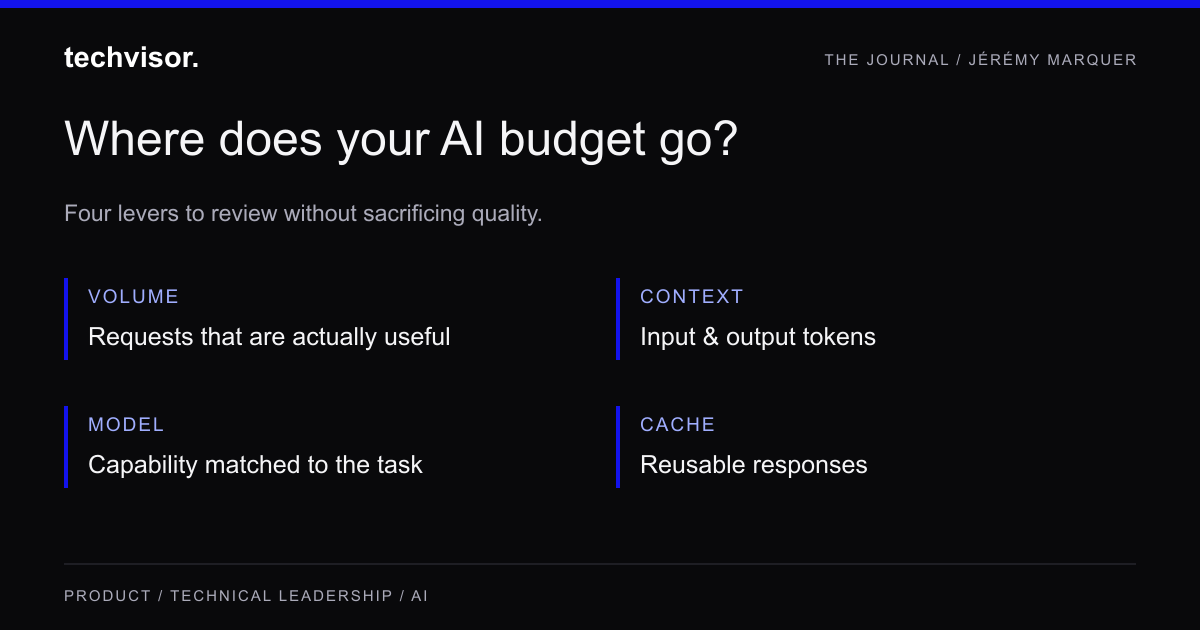
How to reduce LLM costs in a startup: a fractional CTO playbook to cut spend without breaking the product
A practical framework to reduce OpenAI, Anthropic, or Mistral spend in startups through usage audits, prompt trimming, routing, caching, and ROI-based governance.
Data & AI governance playbook for scaling teams
A playbook for scale-ups to align data policy, AI risk decisions, and delivery before they grow from MVP to global product.
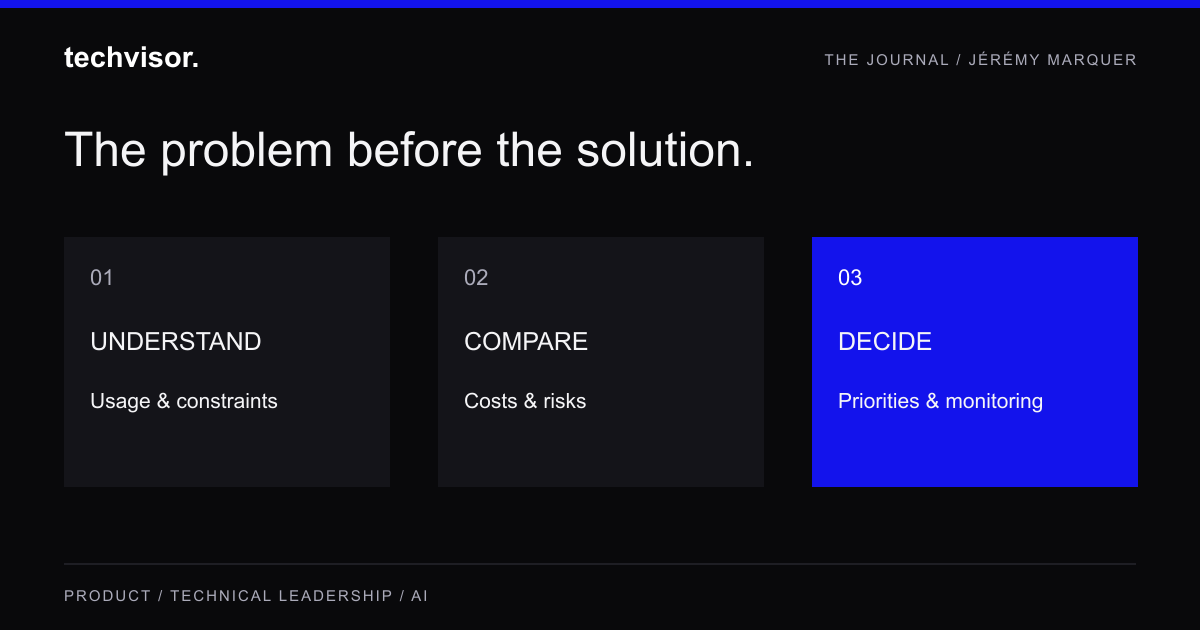
AI Production Architecture Audit: The 45-Day Plan to Reduce Risk, Cost, and Delivery Chaos
A practical framework for startup and SME leaders to audit AI systems in production: governance, GDPR, reliability, security, and unit economics.